
Silliness is a 21st-century superpower. Discover how playful moments can ease stress, improve mood, and bring more joy into your day.
A long, hard day at work. Coping with a bout of doubt. Mulling over the state of the world in general… There’s something I love to do to help divert myself from any worries or stresses that slither and coil their way through my brain. This practice takes my mind off anything, so please, don’t laugh (or do, laughing is great for you): I play hide-and-seek with my dog.
It’s mainly me hiding and my pooch, Jedi, seeking (as far as I know, he doesn’t use The Force), but let me tell you: it is a RIOT! It may seem silly, but I believe it’s the silliness that helps to relieve any doubt or worry, and jolts me out of whatever funk I’m experiencing.
Why humans are wired for play
We seem to be time-poor and stress-rich; days bursting with responsibilities and to-dos. It’s easy to argue that silliness and playfulness have no place in our schedules. But, as it turns out, such behaviour is biologically inherent – what was it that Bloodhound Gang sang? “You and me, baby, ain’t nothin’ but mammals.”
According to anthropologist Edward Norbeck, “Certain forms of play appear to be so deeply rooted as mammalian behaviour that they cross species, genera, families, and orders.”
So, we’re primed to be silly, and plenty of research tells us that silliness and play are important for physical, cognitive, and emotional development in children.
I’m lucky enough that some of the strongest memories I have of my childhood are silly ones: My sister and I dancing – or rather, jumping – boisterously around the living room to Chuck Berry’s My Ding-a-Ling (oblivious to the innuendo of the song). Talent shows, stick-sword battles, blind man’s buff, and toy sagas that rivalled the drama of Gilmore Girls.
But what happens when we grow up? Are we supposed to let silliness sit on the shelf?
How silliness supports mental wellbeing
“Our adult biology remains unique among all creatures, and our capacity for flexibility, novelty, and exploration persists,” says Dr Stuart Brown, clinical researcher, and founder of the National Institute for Play in California. Mental health problems abound like never before, and it seems that with all that we’ve got going on, we’re more likely to feel anxious than playful. But that’s exactly why we need to embrace silliness – it allows us a respite from chaos and confusion.
“My suggestion…” says Jeff Harry, a positive play coach writing in The New York Times, “take a small break from worrying and do something that channels your inner kid and just brings you a little bit of happiness.”
Dr Brown supports this practice for our overall health and wellbeing, saying that our need for silliness and play is the trial-and-error product of millions of years of evolution. “In a world of major continuous change, playful humans who can roll with the punches and innovate through their play-inspired imaginations will better survive.” He goes on to argue that if we suppress our need to play, or let such behaviour fall by the wayside, the consequences can be dire. “The play-less adult becomes stereotyped, and generally is quicker to react to stress with violence or depression than the adult whose play life persists.”
The lasting benefits of being silly
It seems that silliness is a superpower that we should tap into, an ally that will afford us greater balance and joy in our lives.
And, of course, such a superpower is subjective. If you’re inclined to wear a wacky shirt to bring on a few laughs, go for it! If busting out the roller-skates is your jam, then kudos to you, my more-coordinated friend! Embrace your inner goofball, the make-believer, the hide-and-seeker; your silly superpowers are unique to you, “as unique to an individual as a fingerprint,” says Dr Brown. He gives the example that following 9/11, The New York Times published eloquent memories of the victims, and their descriptors had nothing to do with how good they were at ticking off to-dos or how many hours they put in at work:
“The headlines – the summation of a life – were lines like ‘A Spitball-Shooting Executive’, a ‘Lover of Laughter’. Play is who we are.”
Whenever you’re feeling overwhelmed, wound-up, or worried, don’t hesitate to nurture your inner child and allow silliness to take centre stage. If you’re stuck for inspiration, Brown suggests a stroll down memory lane: “If adults can begin to reminisce about their happiest and most memorable moments, they can capture the emotion and visual memories… and begin to connect again to what truly excites them in life.”
In times of turmoil and uncertainty, our ability to make jokes, to act silly, to cheer ourselves and others through absurdity, can help us through. “If the universe is anything, it should be fun,” says Neil deGrasse Tyson.
Sounds like sage advice to me. Now… I’m off to play hide-and-seek.
What is your ‘play personality’?

Dr Brown identified eight different ‘play personalities’; discovering your preferred play modality can help to embrace your inner child and unlock your less-serious side:
THE JOKER ~
For the joker, play revolves around silliness, nonsense, practical jokes, and making others laugh.
THE KINESTHETE ~
Kinesthetes play through movement, like sports, yoga, or dance. The main focus isn’t competition, instead, the joy of the movement takes precedence.
THE EXPLORER ~
Loves to engage in the world, and play might be physical (exploring new places), emotional (exploring feelings), relational (meeting new people), or mental (reading, researching, discovering new ideas).
THE COMPETITOR ~
Enjoys games with rules, and prioritises winning, whether solitary (beating personal records) or social (playing in team sports).
THE DIRECTOR ~
Engages in play by organising, planning, and executing. This could be running a book club, or planning a weekend away.
THE COLLECTOR ~
Plays by seeking out and collecting anything – experiences, interesting objects, you name it.
THE ARTIST ~
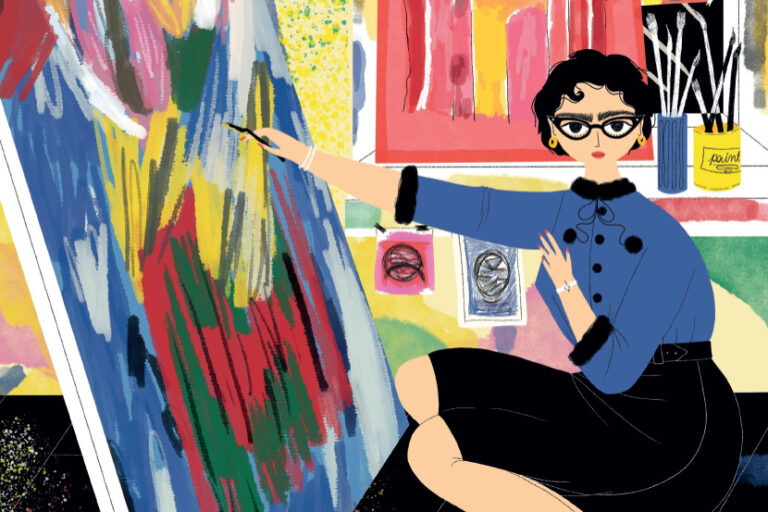
May engage in play through any number of creative pursuits, from gardening to drawing to carpentry. They may also find joy in repairing things or taking things apart to reassemble them.
THE STORYTELLER ~
For the storyteller, play is an adventure into the imagination. They may play by reading, writing, or watching films and performances.
WORDS: Erin McDonald
This article was originally published under the title Play For Keeps in Issue 40 – A Little Abundance. You can purchase previous issues and enjoy more enchanting content here.