
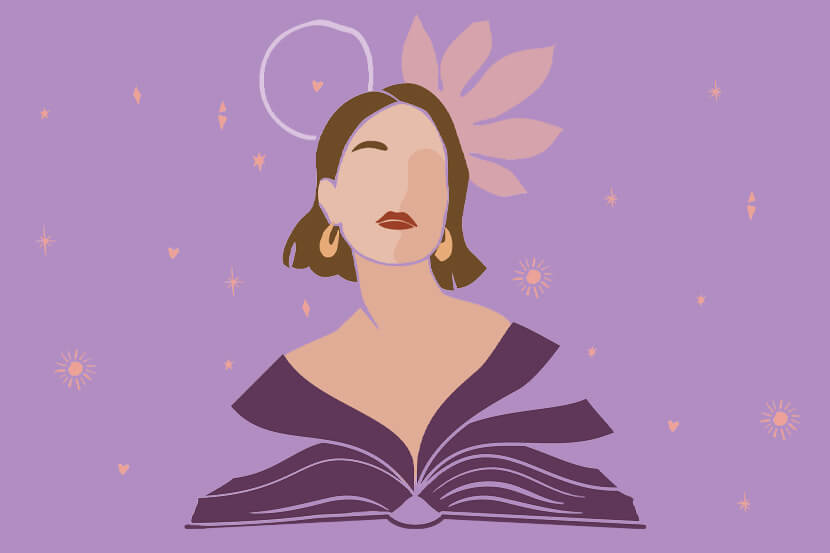
Discover how children’s literature offers a doorway to hope, courage, and wonder – even for us grown-ups.
As adults, we forget so many important things: our imaginations, how to be playful, what really matters. But there’s somewhere we can find that joy again. In the humble pages of children’s books.
I spend as much time as possible in libraries and bookshops, and you’re likely to find me up the back in the kids’ section. Even if my children aren’t with me, I’ll sneak into the colourful surrounds of stories filled with magic and hope.
Actually, that’s not quite true. I no longer sneak around my love of children’s literature. I happily read kids’ books in public, have a Dr Seuss print hanging in my office, know which Hogwarts house I’m in (Ravenclaw!) and, when asked what my favourite books are, I’ll list only children’s titles.
Why we should keep reading children’s books
I am perhaps unusual, because there’s a very strict, unspoken rule that most of us follow when it comes to books: to read in only one direction. We start with Spot, move on to Possum Magic, give up picture books and advance to Ruth Park’s tales, and then on to Anne Frank’s diary and the likes of Looking for Alibrandi and Lord of the Flies. During childhood, we’re encouraged to read in this one direction in order to build our skills and stretch our comprehension.
After that, we move into the world of adults’ books. And there, often, we stay.
The only time we consider it appropriate to go back is when we have children or grandchildren of our own. We then repeat this linear process with our little ones.
We may even stop reading to them somewhere between Alison Lester and Enid Blyton, because they are capable of reading alone.
Many kids don’t want this element of forced growing up to happen. A Scholastic study in the US put figures to this: 83 percent of kids (up to age 17) said they’d love to still be read aloud to. As we stop reading to our young people, us adults stop reading children’s books once again, and carefully set our sights back to those on the adults’ shelves. Those are the unwritten rules.
Finding freedom through reading
But what if we chose to break the rules? Break them in the way that a character from a children’s story would do? Maybe this kind of reading freedom is what growing up really means. As CS Lewis once said, “Someday you will be old enough to start reading fairy tales again.”
Perhaps it’s time to read in all directions: backwards, forwards, sideways, up and down. Some of us adults fall effortlessly back into the wonder of children’s books as we raise our families, and seek to impart life lessons and cherished wisdom. We begin to enjoy reading aloud with our children and grandchildren, and before we know it, we’re choosing to read their books on our own. After some time, we might skip the adults’ section in bookshops and go straight to the joyful wonder of the shelves that hold Gulliver’s Travels, A Wrinkle in Time, The BFG. We realise we can find happiness in these stories, and come to remember that this is a feeling worth pursuing.
How children’s stories soothe the adult soul
Author Katherine Rundell agrees that reading kids’ books is important for us at any age. In her book, Why You Should Read Children’s Books, Even Though You Are So Old And Wise, she explains “The writing we call children’s fiction is not a childish thing: childish things include picking your nose and eating the contents, and tantruming at the failure to get your own way… Children’s fiction has childhood at its heart, which is not the same thing.
“Children’s books can teach us not just what we have forgotten, but what we have forgotten we have forgotten.”
What many of us have lost sight of is what it’s like to be anything but an adult. Actually, the best thing for us may be to pick up a copy of Dahl’s George’s Marvellous Medicine to remind ourselves of the power of rebellion, and the dangers of becoming someone who takes life too seriously.
Children’s literature expert Dr Allison Greenland from Leap into Literacy says that these stories offer us respite, too.
“They help us to escape the ordinary. A lot of adults’ books focus on our problems – break-ups, divorce, political issues – while children’s books give us back some of those feel-good moments. They remind us of the times in childhood that we liked: not having the weight of the world on our shoulders, the ability to go off an adventure, a belief in magic.”
Finding solace in youthful stories
It’s children’s books I reach for when life feels like it’s falling apart around me; when the wide world seems so tainted that I can hardly breathe; when people I love are fading out of life; and as the worries hit thick and fast.
I pick up Matilda to remember that one girl can channel miracles. I get stuck into Jessica Townsend’s Nevermoor series to remind myself I’m not the only one feeling out of sync with the people around me. Remember to put work back in its place after reading Shaun Tan’s Cicada. Reread Seven Little Australians to see that a family can live on, even without their beloved Judy. I wander outside with Emily of New Moon, among the gnarled trees and fairies, to be assured once again that “everything might come true.”
Reading children’s literature as an adult is not about trying to relive childhood or childishness. It’s about recapturing a sense of hope, rediscovering our courage, and reawakening the wonder within.
Kids’ books with life lessons we can learn from
The Giving Tree by Shel Silverstein
For generosity, selflessness, and the gifts of giving.
The Lorax by Dr Seuss
For responsibility, and our individual and collective power to make a difference.
Alexander and the Terrible, Horrible, No Good, Very Bad Day by Judith Viorst
For empathy, the ability to endure tough stuff, the universal experience that sometimes bad things happen (and they pass).
Elmer by David McKee
For self-acceptance, and the courage to embrace being different.
The Complete Tales of Winnie-The-Pooh by AA Milne
For treasuring friendship, and not taking those you love for granted.
WORDS: Megan Blandford
This article was originally published under the title Young at Heart in Issue 39 – A Little Abundance. You can purchase previous issues and enjoy more enchanting content here.