
A fluffy, whole-wheat take on a beloved family recipe, perfect for sharing, enjoying, and creating memories over.
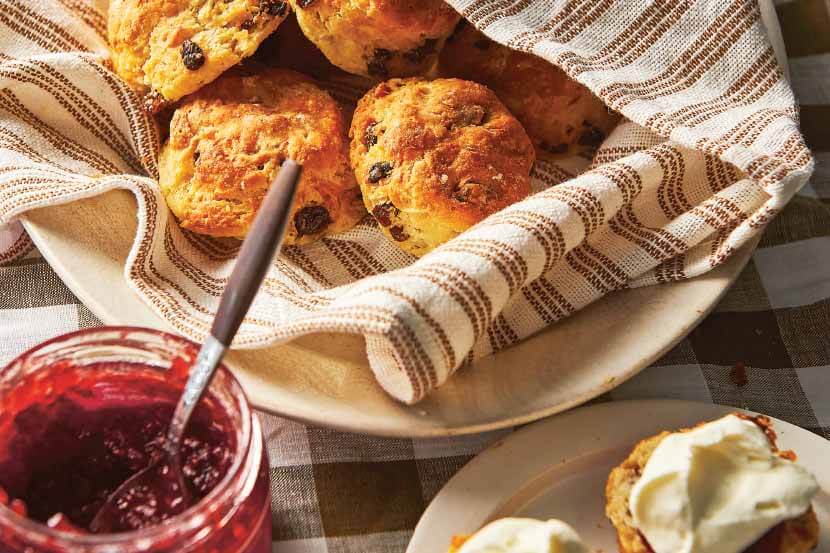
My mum, Cooee, was a wonderful scone maker. If anyone arrived unexpectedly for afternoon tea, she would duck into the kitchen, and it seemed within minutes a basket of warm scones wrapped in a starched tea towel was being popped on the table, along with a bowl of home-made strawberry jam, softly whipped cream, and a dish of butter triangles. I used to love helping her make them. She’d stand me on a stool beside her and show me how to rub the cold butter (yes, it always had to be cold) into the flour. Then she would add a big handful of chopped dates or sultanas, and finally the milk. I would delight in watching them puff up in the oven, their tops turning golden as they did.
To this day, I can’t think of anything more delicious for afternoon tea.
This recipe is a version of Mum’s scones. I like to use a mixture of whole-wheat and self-raising flour to give the scones a gentle ‘wheaty’ flavour and, of course, I always add buttermilk for lightness and dried fruit for sweetness. I’d have to say, though, that they’re just as delicious without the fruit, especially once the jam and cream are dolloped on top. I hope you enjoy them.
SERVES: 18-20
SPECIAL EQUIPMENT: heavy baking tray (optional), food processor (optional), scone cutter (about 5.5 cm in diameter)
INGREDIENTS
- 3 cups (450 g) self-raising flour
- 1 cup (150 g) whole-wheat selfraising flour
- ¼ cup (55 g) caster sugar
- 1 teaspoon salt
- 180 g chilled, unsalted cultured butter, finely diced
- 200 g sultanas or roughly chopped, pitted dates (optional)
- 2 cups (500 ml) buttermilk
- plain flour, for dusting
METHOD
- Preheat the oven to 180°C fan-forced (200°C conventional).
- Dust a heavy baking tray with flour and set it aside. (If you don’t have a heavy baking tray, you can use a lightweight one, but line it with a double thickness of baking paper so the bottoms of the scones don’t burn.)
- Combine the flours, sugar, and salt in a large bowl. Mix them together with a hand whisk for 1 minute so they’re thoroughly combined and aerated. Scatter the little chunks of butter over the top, and use clean fingers to rub the butter into the flour mixture until it resembles coarse breadcrumbs. (If you like, you can mix the dry ingredients and cut in the butter using a food processor, then transfer the mixture to a large bowl.)
- Add the sultanas or dates and toss them about so they’re well coated.
Make a well in the centre. Pour in the buttermilk and stir it in very lightly until the mixture starts to come together into a somewhat sticky dough. - Dust a work surface with flour and turn the mixture out onto it. Knead gently until just combined – don’t overdo this or the scones will toughen. Pat the dough out into a round about 4 cm thick.
- Dip a scone cutter (the one I use is 5.5 cm in diameter) or a small tumbler into some flour to prevent the dough sticking to it, then stamp out the scones, dunking the cutter back into the flour before each one.
Gently knead together any scraps and cut them again. - Snuggle the scones close together on the prepared baking tray and dust them very lightly with flour. Bake for about 20 minutes, until golden.
- Remove them from the oven and wrap immediately in a clean tea towel.
Leave for 5 minutes, then serve with butter or lashings of jam and cream.
RECIPE: Belinda Jeffrey
Looking for more baking inspiration? Pick up a copy of The Baker’s Book edited by Ruby Goss, photography by Rochelle Eagle, illustrations by Beci Orpin. Murdoch Books RRP $45.00.
This recipe was originally published in the article Sweet Comforts in Issue 41 – Her World Awaits. You can purchase previous issues and enjoy more enchanting content here.