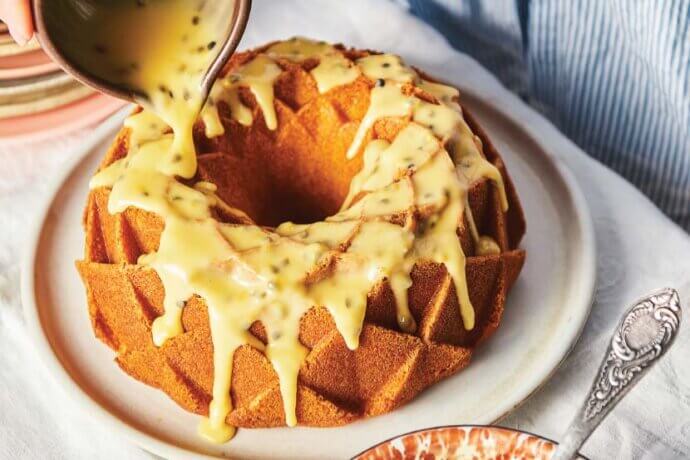

There is both great comfort and generosity to be found in a good plain cake. We return to it again and again in my house.
When I don’t know what else to make, this is what I always bake. The choice of icing may vary – sometimes a fruity glaze or just a dusting of icing sugar – but my personal favourite, and one that feels particularly Australian, is passionfruit icing. The sharp fruitiness is the perfect foil for the soft, sweet cake beneath. I’m also particularly fond of what buttermilk and a bundt tin can bring to a simple cake. Buttermilk adds a lovely soft crumb and slight lactic-acid tang. I always have a carton of it in my fridge, thereby ensuring a cake or batch of pikelets is never far away, and I often use it in recipes in place of regular milk.
And a bundt tin? Well, it can elevate the plainest of cakes into an aesthetic masterpiece, so what’s not to love there?
SERVES: 10
SPECIAL EQUIPMENT: large 10 cup (2.5 litre) bundt tin, stand mixer with paddle attachment
INGREDIENTS
- plain flour, for dusting
For the cake
- 225 g unsalted butter, softened, plus extra for greasing
- 275 g caster sugar
- 3 teaspoons vanilla bean paste
- 4 large eggs, lightly beaten
- 250 g self-raising flour with a pinch of bicarbonate of soda (baking soda)
- 1⁄8 teaspoon fine salt
- 185 ml buttermilk, at room temperature
For the passionfruit icing
- 180 g icing sugar, sifted
- 2 tablespoons fresh passionfruit pulp
METHOD
For the cake
- Preheat the oven to 160°C fan-forced (180°C conventional).
- Grease a large 10 cup (2.5 litre) bundt tin well with extra softened butter.
- Dust the tin with a little plain flour, tapping out any excess.
- In the bowl of a stand mixer, combine butter, sugar, and vanilla.
Use the paddle attachment to cream until very light and fluffy. This will take several minutes, depending on the softness of the butter. Continue until the mixture is very pale and light. - Add the eggs one at a time, beating well after each addition.
- Sift self-raising flour with the bicarbonate of soda and salt into a medium bowl, and whisk gently to combine.
- Add half the flour mixture to the creamed butter, stirring gently until just combined.
- Add half the buttermilk and mix until incorporated.
- Add the remaining flour mixture, then the remaining buttermilk.
- Stir gently until the batter is smooth. Avoid overmixing.
Optional: Mix by hand instead of using the stand mixer. - Spoon the batter into the prepared tin, smoothing the top.
- Tap the tin on the bench a few times to remove any air bubbles.
- Bake for 30–35 minutes, until golden and cooked through. A skewer inserted in the centre should come out clean.
- Cool in the tin for 10 minutes, then carefully turn out onto a wire rack to cool completely.
For the passionfruit icing
While the cake is cooling, combine icing sugar and passionfruit pulp in a small bowl. Stir until smooth. Check the icing consistency: it should be pourable but not runny. Adjust the consistency by adding more passionfruit pulp or icing sugar if necessary.
For assembly
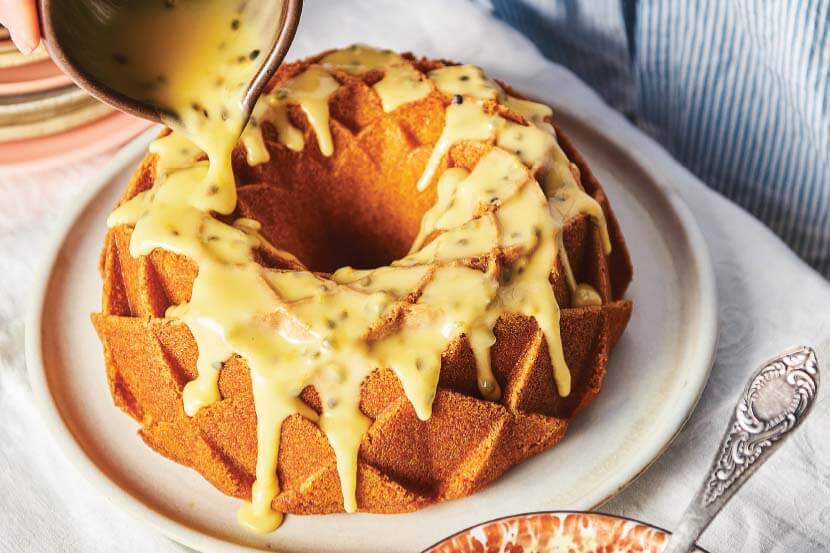
Transfer the cooled cake to a serving plate. Pour the icing over the cake, letting it drip down the sides.
Slice and serve immediately, or wait for the icing to set if preferred.
Storage
This cake is best eaten on the day it is made. If stored, keep in an airtight container in a cool place for 2–3 days and reheat slices gently.
RECIPE: Tilly Pamment
Looking for more baking inspiration? Pick up a copy of The Baker’s Book edited by Ruby Goss, photography by Rochelle Eagle, illustrations by Beci Orpin. Murdoch Books RRP $45.00.
This recipe was originally published in the article Sweet Comforts in Issue 41 – Her World Awaits. You can purchase previous issues and enjoy more enchanting content here.